
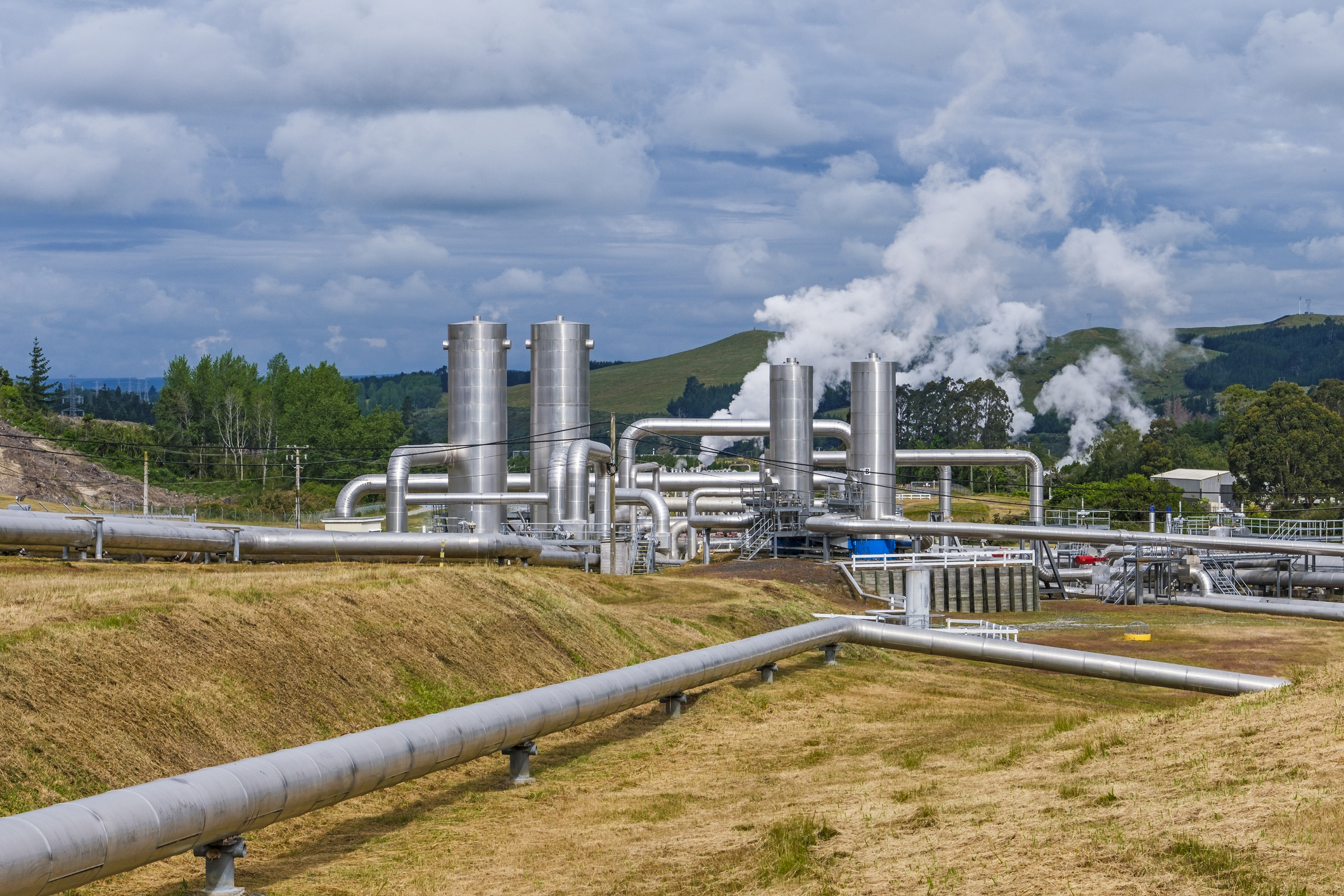

Utilization of geothermal industrial heat in these locations could displace 840 million euros per year in fuel spending, increase energy security on the continent, and avoid 4.29 million tonnes of carbon dioxide emissions annually
MADRID, Spain (October 27, 2026) — Project InnerSpace, in partnership with Future Cleantech Architects (FCA), will released Unlocking Europe’s Geothermal Industrial Heat Potential, a first-of-its-kind analysis identifying geothermal potential in every European Union (EU) country and highlighting 30 industrial clusters across 12 European countries that are priority candidates for geothermal heat conversion.
Together, the clusters could displace about €840 million a year in fuel spending, and avoid 4.29 million tonnes of carbon dioxide emissions annually – equivalent to CO₂ emissions from more than nine million barrels of oil consumed.
The 30 opportunities are located in a dozen Member States: Austria, Belgium, Czech Republic, France, Germany, Hungary, Italy, Luxembourg, the Netherlands, Portugal, Slovenia, and Spain.
The 30 identified clusters are a starting point, not the limit of the opportunity: the analysis also identifies a wider pool of 120 candidate clusters that could follow, with every country in the EU having potential for geothermal industrial heat utilization.
Natural gas supplies roughly half of EU industrial heat, and the EU imports about 90% of the gas it consumes. Yet the subsurface beneath the EU 27 holds an estimated 18,000 gigawatts-thermal of heat at 100°C or above, a temperature sufficient to service a wide variety of industrial heat processes, including cooking, dehydration, distillation, and sterilization.
Geothermal, often overlooked in heat decarbonization discussions, could provide Europe with reliable, domestic, always-on heat while reducing exposure to imported fuels and volatile energy prices. A spike in gas prices on the continent in 2022 illustrated how exposed European industry is to imported fuel volatility, with output in Germany’s energy-intensive industries falling by about 20% as one example. Drawing more industrial heat from domestic geothermal wells could reduce that exposure to price swings and supply disruptions, and help European manufacturers stay competitive.
“Geothermal is often thought of as electricity, but its industrial heat applications are a major opportunity hiding in plain sight,” said Drew Nelson, VP of Strategy at Project InnerSpace. “Europe has enormous potential for geothermal industrial heat. Utilizing it can strengthen Europe’s energy security and industrial competitiveness at a time of high energy prices.”
The analysis proposes the following policy interventions to support geothermal industrial heat utilization:
- Identify and organise the first projects:
- Make industrial geothermal a priority
- Turn heat demand into clusters
- Designate a credible operator for each cluster;
- Reduce early-stage risk and unlock investment:
- Take the risk out of first wells
- Make Innovation Fund pathways work for first-of-a-kind next-generation geothermal
- Make industrial geothermal clusters financeable;
- Create the conditions for geothermal to scale:
- Accelerate permitting and secure geothermal rights
- Improve subsurface data and reduce seismicity risk.
“Next-generation geothermal has great potential but is still in the early phases of commercialization in Europe. It is precisely at this point that public policy can bridge the gap between the lab and the market – just as it did for solar and wind decades ago,” said Dr Marlène Siméon, Director of Policy at Future Cleantech Architects.
The EU’s forthcoming Geothermal Strategy and Action Plan, together with the Geothermal Stakeholder Partnership, is a natural place to bring these measures together by naming priority clusters for geothermal in industrial heat development. Member States can spell out the role geothermal will play in meeting renewable energy targets in their national energy and climate plans. The 30 clusters give both levels of government a practical place to begin.
Project InnerSpace and Future Cleantech Architects will present the findings in a webinar on October 28, with opening remarks from Andris Piebalgs, former EU Commissioner for Energy, and Martin Hojsík, European Parliament Vice-President.
About Project InnerSpace
Project InnerSpace is the leading independent non-profit organization dedicated to the global development of geothermal energy. We are a focused research organization, on a mission to remove the major barriers standing in the way of the exponential growth and development of geothermal energy worldwide by 2030. To learn more about Project InnerSpace, please visit www.projectinnerspace.org.
About Future Cleantech Architects
Future Cleantech Architects is an independent, non-profit, and non-partisan climate think tank focused on accelerating innovation in critical industries to close the gap to net-zero by 2050.