
The UN Climate Change Conference (COP31) is likely to push for more ambitious global electrification targets. Heavy industry must also follow this path. But deploying it at scale requires an energy system that can deliver clean, reliable, and affordable electricity when and where it is needed. This means investing not only in new technologies, but also in grids, flexibility, and system optimization.
Today at the Future Cleantech Festival, participants explored both sides of that challenge:
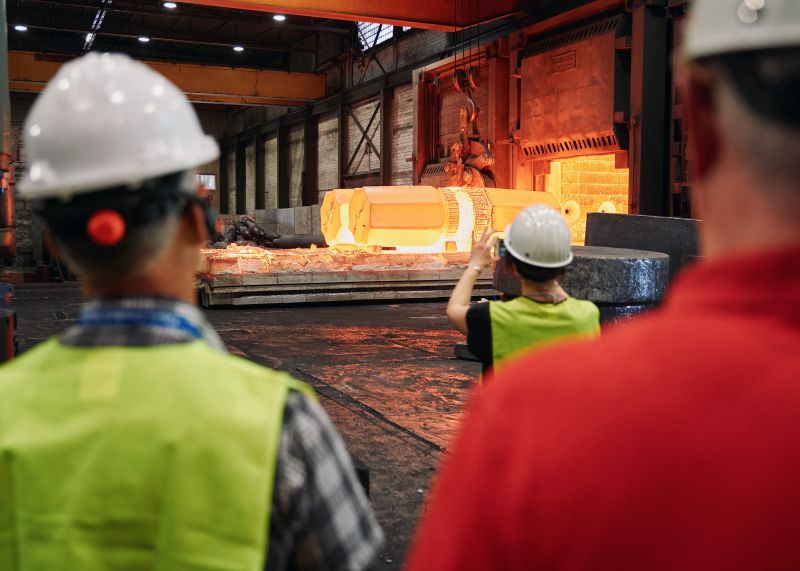
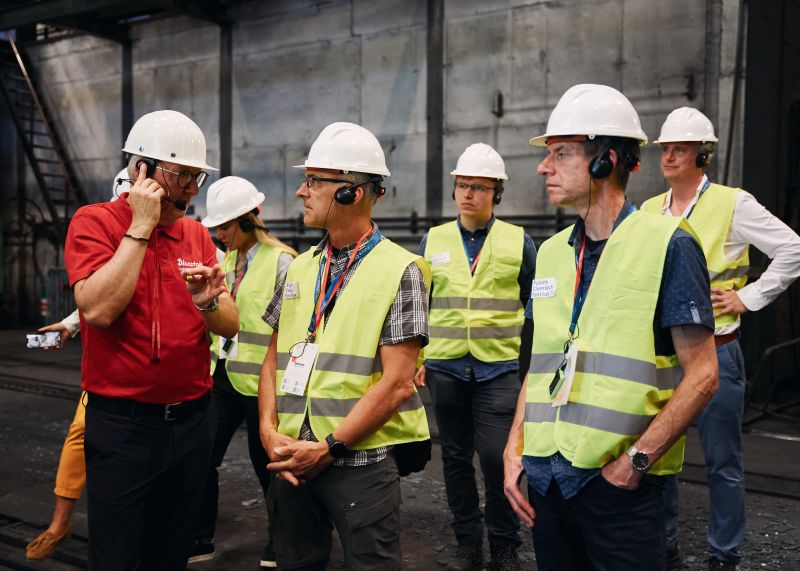
At Dirostahl, participants saw the realities of high-temperature industrial heat. While much of a forging facility already runs on electricity, large furnaces still rely on natural gas to heat steel workpieces to temperatures above 1200°C. Decarbonizing these processes will require more than replacing a burner. It will depend on affordable clean electricity, new electrification technologies, thermal energy storage, and the grid infrastructure needed to support them at scale.
At the utility company EWR, participants stepped inside the control room to see how balancing supply and demand, maintaining grid stability, and enabling flexibility are becoming just as important as building new generation capacity and innovating for electrification of industry.