

Brussels, 18 March 2026 – As geopolitical tensions continue to drive volatility in oil and gas markets, Europe must accelerate investment in breakthrough clean technologies to escape what one European lawmaker described as “fossil fuel serfdom.”
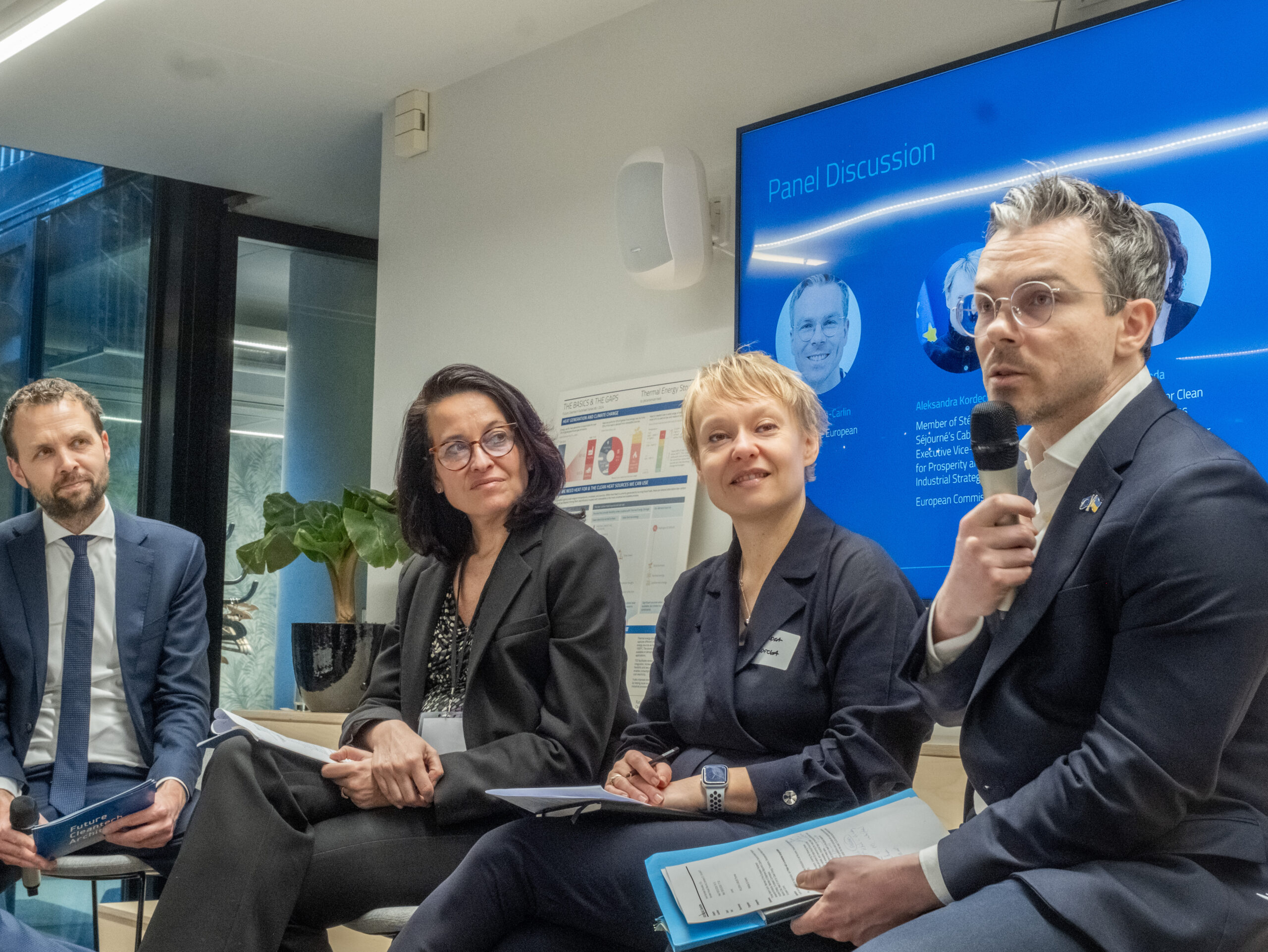
At an event hosted in Brussels today by the climate innovation think tank Future Cleantech Architects (FCA), speakers from the European Commission and the European Parliament highlighted solutions to deliver abundant, affordable clean energy for industry and households.
Key takeaways from the discussion:
- Cleantech innovation is central to Europe’s energy security and competitiveness, reducing exposure to fossil fuel price volatility.
- Three priority areas for EU leadership: next-generation geothermal, clean industrial heat, and grid-enhancing technologies.
- The main bottleneck remains scaling technologies from pilot to deployment, requiring better coordination of EU funding, regulation, and market design.
The discussion comes as the European Union prepares key decisions on energy security, industrial competitiveness, and the future of its Energy Union framework.
“European fossil fuel dependence is the road to serfdom,” said Thomas Pellerin-Carlin, Member of the European Parliament (S&D), arguing that the best response to energy shocks linked to Russia and Iran, as well as future gas crises, is to accelerate investment in innovative renewable energy technologies, energy sufficiency and efficiency.
Beatrice Coda, Head of Unit for Clean Energy Transitions within the Directorate-General for Research and Innovation at the European Commission, highlighted the role of Horizon Europe, including the European Innovation Council (EIC) as well as public procurement and private corporates in moving from pilots to commercial scale.
Dr. Marlène Siméon, Director of Policy at Future Cleantech Architects said: “Europe’s recurring energy stress and the impacts of fossil fuel dependency should accelerate the shift to clean, dispatchable, home-grown energy.”
The event, titled “Transformative Cleantech: Breakthrough Technologies for EU Leadership in the Clean Energy Transition,” brought together over 70 policymakers and representatives from industry and civil society organizations. It also marked five years of Future Cleantech Architects’ work and the move of the organization to the Norrsken House Brussels.
About Future Cleantech Architects
Future Cleantech Architects is an independent, non-profit, and non-partisan climate think tank focused on accelerating innovation in critical industries to close the gap to net-zero by 2050.
Contact:
Tal Harris, Head of Communications, tal.harris@fcarchitects.org +41-782530550.